Crate Digging Across the Channel: The British Record Hunters Reshaping Their Own Musical DNA
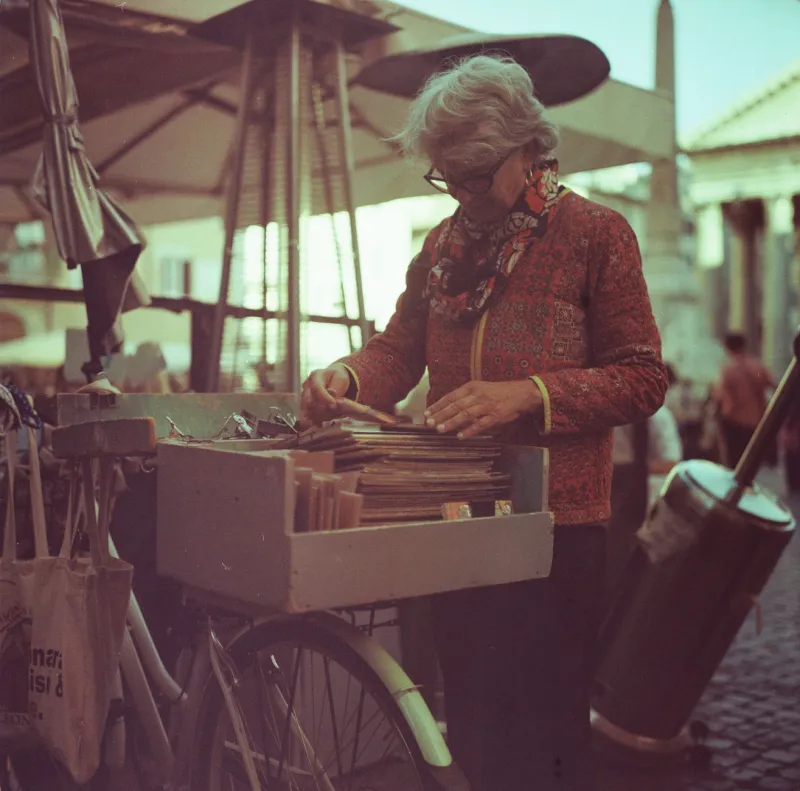
The holdall is important. Not a suitcase — too conspicuous, too much explaining at customs. Not a backpack — not enough structure for a stack of twelve-inches. A holdall, ideally one that started the journey looking reasonably empty, is the vessel of choice for the growing community of British record diggers who are crossing the Channel on dedicated vinyl-hunting expeditions. They go out light. They come back heavy. And the music they haul home is quietly reshaping what British collectors — and by extension, British musicians — actually know.
The vinyl revival is well-documented at this point. UK record sales have grown for sixteen consecutive years. Independent record shops are opening at a rate not seen since the nineties. But less discussed is the parallel trend of British collectors travelling specifically to dig in European cities — Paris, Berlin, Amsterdam, Brussels, Vienna, Lisbon — hunting pressings, imports, and regional oddities that simply never made it to these shores in any meaningful quantity.
Why Europe? Why Now?
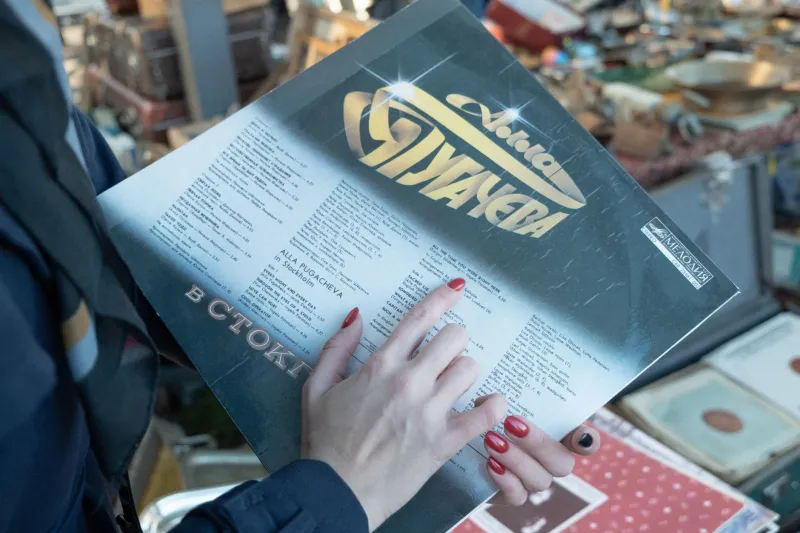
The reasons are partly practical, partly philosophical. European cities — particularly those with strong post-war immigrant communities or Cold War-era cultural exchange programmes — ended up with extraordinarily diverse record collections filtering through their secondhand markets. A Paris flea market might yield West African funk records that were distributed locally in the 1970s and never exported. A Berlin Plattenladen might be sitting on a stack of Eastern Bloc jazz pressings that circulated across the Soviet sphere and ended up in unified Germany's secondhand ecosystem. Vienna, with its history as a crossroads between East and West, turns up music from parts of the world that barely registered in the UK market.
"The UK's secondhand record market reflects the UK's music history," explains DJ and collector Priya Sharma, who makes two or three European digging trips per year. "Which is great — it's a rich history. But it has blind spots. Go to Amsterdam and you find Indonesian music that came over with Dutch colonial migration. Go to Lisbon and there's Cape Verdean music, Angolan music, stuff that arrived through Portugal's own imperial history. It's a completely different archive."
That archival difference is the point. British diggers aren't just going to Europe to find cheaper copies of records they could buy at home. They're accessing entirely different musical lineages — histories that intersected with Europe rather than Britain, sounds that took different routes across the Atlantic or arrived via trade winds that bypassed the UK entirely.
The Find That Changes Everything
Ask any serious collector about the record that redirected their taste and you'll get a story involving a foreign trip. For producer and DJ Leon Achterberg — born in Leeds, now based in Bristol — it was a 1974 Ethiopian jazz record found in a cardboard box under a trestle table at a Vienna flea market. "I didn't know what it was. I bought it because the sleeve was interesting and it was fifty cents," he says. "I got back to the hostel, couldn't listen to it obviously, and then I got home and put it on and it just... undid something in me. I spent the next six months going deep on Ethio-jazz. It completely changed my production."
His subsequent work — which has been released on two Bristol-based independent labels and licensed for use in a BBC documentary — carries a clear Ethio-jazz influence that he traces directly to that Vienna box. "I would never have found that in a UK shop," he says. "Not because it doesn't exist here, but because I wouldn't have been looking in the right place, and no algorithm would have sent me there."
This is the crucial distinction that diggers return to repeatedly: the physicality of the find. An algorithm can surface music adjacent to your existing taste. It cannot put a record in your hands that you didn't know to search for, in a language you don't read, with sleeve art that just looks interesting. The serendipity of the physical dig operates on entirely different logic.
The Shops Worth Crossing the Channel For
For those considering their first digging trip, the landscape is well-mapped by the collector community, even if it's not always written down in one place. In Paris, the area around Pigalle and the Canal Saint-Martin has a cluster of shops with strong African and Caribbean stock, reflecting the city's Francophone African community. Berlin's Neukölln and Kreuzberg neighbourhoods host shops with deep electronic, Turkish Arabesque, and world music sections that reflect the city's own migration history. Amsterdam's Waterlooplein flea market is legendary for its unpredictability — you might find nothing, or you might find a stack of Surinamese funk records that nobody's touched in thirty years.
Lisbon has become increasingly significant in recent years. The city's secondhand market carries substantial quantities of music from Portugal's former colonies — Cape Verde, Angola, Mozambique, Guinea-Bissau — that is genuinely difficult to find anywhere else in Europe. Collectors who've made the trip speak of it in near-reverential terms.
"Lisbon changed my relationship with African music entirely," says Sharma. "I found morna records, semba records, things I'd read about but never actually heard. And then you're in Lisbon, and you can go and hear this music live, and eat food from these cultures, and suddenly it's not just a record — it's a whole world."
What Comes Home
The records themselves are only part of the story. What also comes home is context — a richer understanding of why music sounds the way it does, where it came from, what journeys it made. Collectors who dig in Europe tend to become more curious listeners generally, more attuned to the histories embedded in sound.
And that curiosity feeds back into British music. Artists who dig — and there are many, across genres from grime to indie to electronic — bring those influences into their own work. The Vienna find becomes a Bristol album. The Paris flea market becomes a London DJ set. The Amsterdam shop becomes a Birmingham producer's new palette.
It's a form of cultural exchange that works through objects, through the physical transmission of recorded sound across borders and decades. Slower than streaming, more effortful, more expensive. But also, perhaps, more transformative.
The holdall comes home heavier. British music gets a little stranger, a little wider, a little more connected to the rest of the world. That seems like a fair trade.