Five Festivals That Will Change How You Hear the World (None of Them Are Glastonbury)
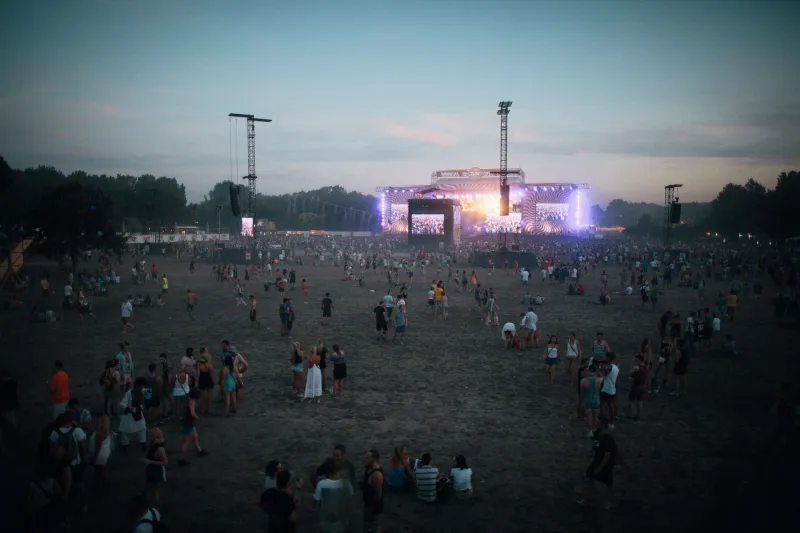
There's nothing wrong with Glastonbury. Let's get that out of the way immediately. Worthy Farm in June, a decent pair of wellies, and the distant sound of something extraordinary drifting across the Pyramid Stage fields — it's one of the great British cultural rituals, and no one here is suggesting you abandon it.
But.
If your festival passport has started to feel a little predictable — if you already know roughly which acts will headline, which food stalls will be there, and exactly how the mud will smell — then perhaps it's time to follow the sound somewhere genuinely new. The world is full of music festivals that most UK travellers have never heard of, and some of them are frankly extraordinary: smaller, stranger, more culturally immersive, and occasionally life-changing in the way that only unexpected music in an unexpected place can be.
Here are five that deserve a spot on your radar.
1. Iceland Airwaves — Reykjavík, Iceland
Usually held: Early November Vibe: Intimate, boundary-pushing, genuinely Arctic
Iceland Airwaves is the festival that keeps getting quietly recommended by music journalists and then somehow remaining undiscovered by the wider public. Which is, frankly, baffling, because it's one of the most distinctive music events in Europe.
Held across Reykjavík's bars, concert halls, and occasionally some genuinely surreal outdoor spaces, Airwaves has a reputation for showcasing Icelandic artists alongside carefully curated international acts — and Iceland punches so far above its weight musically that the local lineup alone is usually worth the flight. This is, after all, the country that gave us Björk, Sigur Rós, Of Monsters and Men, and a seemingly endless stream of post-rock bands who've clearly spent too much time staring at lava fields.
The format is refreshingly human-scaled. You wander between venues in the dark (it's November in Iceland, so very dark), stumble into a tiny club to find a completely unknown artist doing something that rearranges your musical furniture, then warm up with a bowl of lamb soup before doing it again. The city itself becomes the festival site.
Getting there: Direct flights from London, Edinburgh, and Manchester with Icelandair and easyJet. Reykjavík is compact enough to navigate on foot. Book accommodation early — the city fills up significantly during the festival.
Artists to watch: The Airwaves lineup consistently features Icelandic acts you won't find anywhere else. In recent years, artists like GDRN, Laufey (before she became internationally famous), and the experimental collective Kælan Mikla have all made their mark. Follow the festival's social channels for announcements.
2. Les Eurockéennes de Belfort — Belfort, France
Usually held: Late June / Early July Vibe: Massive, eclectic, overlooked by British festivalgoers
Les Eurockéennes has been running since 1989 and regularly pulls lineups that rival Glastonbury for sheer ambition — yet somehow remains almost completely off the radar for UK festivalgoers, who tend to gravitate towards the more heavily marketed French events like Solidays or Rock en Seine.
Held on the Malsaucy peninsula near Belfort in eastern France, the festival site is genuinely beautiful: a lakeside setting surrounded by forest, with multiple stages ranging from enormous main arenas to intimate woodland spaces. The programming is genuinely eclectic in the European tradition — you'll find metal, electronic, hip-hop, African music, and indie rock sharing billing in a way that feels natural rather than forced.
Past headliners have included Radiohead, The Prodigy, Gorillaz, and Massive Attack, but the supporting lineups tend to be where the real discoveries happen. The French festival circuit has always had a stronger appetite for African and world music than its British equivalent, and Les Eurockéennes reflects that.
Getting there: Belfort is roughly 90 minutes from Basel by train, which is easily reachable from London via Eurostar to Paris (then TGV). Alternatively, fly to Basel-Mulhouse-Freiburg airport. Camping on site is available and genuinely pleasant.
Cultural tip: The Franche-Comté region around Belfort is worth exploring beyond the festival. The Vauban citadel in the town centre is a UNESCO World Heritage site, and the local cuisine — particularly the cheese and charcuterie — is exceptional.
3. Fès Festival of World Sacred Music — Fès, Morocco
Usually held: Mid-June Vibe: Profound, ancient, unlike anything else on earth
If you've ever wanted a festival that feels like it operates on a different temporal frequency entirely, the Fès Festival of World Sacred Music is it. Held annually in one of the world's best-preserved medieval cities, this is not a festival in the conventional sense — it's more of a gathering, a meditation on music as a spiritual practice across traditions.
The programming spans Sufi music, Gregorian chant, Andalusian classical music, Hindu devotional song, and a dozen other sacred traditions from across the globe. The venues include the ancient Bab Makina palace square and the gardens of the Jnan Sbil park — settings that make even the most familiar music feel transformed. Watching a Qawwali ensemble perform under the stars in a 14th-century courtyard is, to put it plainly, an experience you will not forget.
The festival also hosts daytime talks, workshops, and cultural exchanges that make it genuinely educational in the best sense — not worthy or dry, but alive with the sense that music is trying to tell you something important.
Getting there: Regular direct flights from London Heathrow, Gatwick, and Manchester to Fès-Saïs airport. The medina is a UNESCO World Heritage site in its own right — build extra days into your trip to explore it properly. Morocco is a short flight and a world away.
Practical note: Book accommodation well in advance. Fès is a popular destination and festival week fills up quickly. Riads within the medina offer the most immersive experience.
4. Roskilde Festival — Roskilde, Denmark
Usually held: Late June / Early July Vibe: Progressive, community-driven, genuinely values-led
Roskilde is one of Europe's oldest and largest music festivals, yet it maintains a reputation for doing things differently that many far smaller events would envy. It's run as a non-profit, with all proceeds going to humanitarian and cultural causes — a fact that gives the whole event a distinctive atmosphere, less transactional and more communal than most commercial festivals.
The lineup is consistently adventurous. Roskilde has a long history of booking African, Middle Eastern, and Latin American artists alongside major Western headliners, and the audience is sophisticated enough to show up for all of it. The Roskilde Orange Stage is one of the great festival stages in the world — vast, atmospheric, and capable of hosting the kind of transcendent communal experience that you'll be talking about for years.
Getting there: Fly to Copenhagen and take a train directly to Roskilde — the journey takes about 25 minutes. The city itself is worth a day or two: the Viking Ship Museum on the fjord is extraordinary.
Artists to watch: Recent lineups have included everything from Kendrick Lamar and Massive Attack to Mdou Moctar and Mdundo. The world music programming, spread across multiple smaller stages, is particularly strong.
5. Gnaoua World Music Festival — Essaouira, Morocco
Usually held: Late June Vibe: Hypnotic, coastal, spiritually charged
Two Moroccan festivals in one list might seem excessive, but Essaouira's Gnaoua Festival is a genuinely different proposition from Fès. Where Fès is ancient and contemplative, Essaouira is breezy, coastal, and electric — a whitewashed Atlantic port city that hosts one of the most extraordinary fusions of traditional and contemporary music anywhere in the world.
Gnaoua music is a trance tradition rooted in the rituals of sub-Saharan Africans brought to Morocco as enslaved people centuries ago. It's rhythmically hypnotic, spiritually powerful, and utterly unlike anything in the Western musical tradition. The festival pairs Gnaoua masters (maalem) with jazz musicians, electronic producers, and world music artists in collaborations that shouldn't always work but frequently produce something genuinely transcendent.
The whole city becomes the festival venue. Free concerts happen on the main square and the beach, paid events take place in more intimate settings, and the music seems to seep into the walls of the medina itself.
Getting there: Fly to Marrakech and take a bus or shared taxi to Essaouira (roughly three hours). The journey itself is worthwhile — the landscape between the two cities is striking. Essaouira is an increasingly popular destination, so accommodation books up months in advance for festival week.
The Bigger Picture
Every festival on this list offers something that no amount of streaming can replicate: the experience of hearing music in the place and culture that made it, surrounded by people for whom it means something profound. That's not a small thing. In a world of infinite digital access, the irreplaceable quality of physical presence — of actually being somewhere, listening with your whole body — is more valuable than ever.
So yes, book your Glastonbury tickets. But maybe, just maybe, book one of these as well. Your ears will thank you.