Fifty Pence and a Revelation: Inside the World Music Gold Rush Happening in British Charity Shops

Let's set the scene. It's a Tuesday afternoon in Stockport. A man named Daniel — 26, graphic designer, self-described "obsessive" — is crouched on the floor of an Oxfam, methodically working through a milk crate of vinyl that smells faintly of someone else's living room. He's been here forty minutes. He's found a Barry Manilow, two copies of the same Dire Straits album, and something that makes him stop entirely: a 1970s Ethiopian jazz LP, still in its original sleeve, priced at 80p.
"I actually said something out loud," he tells me later, laughing. "I don't even know what. Something embarrassing. The volunteer at the counter looked over."
The record in question was by Mulatu Astatke — the father of Ethio-jazz, whose music became globally known after appearing on the Broken Flowers soundtrack. For a serious collector, finding it in a Stockport Oxfam for less than a pound is the equivalent of discovering a first edition in a car boot sale. For Daniel, it was also the beginning of a six-month deep dive into Ethiopian music that he describes as "completely changing how I hear rhythm."
This is the charity shop discovery phenomenon — and it's more widespread, more culturally significant, and more economically interesting than it might initially appear.
How the World Ends Up on the High Street
The question that every serious charity shop digger eventually asks is: how does this stuff get here? The journey of a world music record from its country of origin to a British high street is rarely straightforward, but it follows a few well-worn paths.
The most common route is through the diaspora communities that have shaped British cities since the mid-twentieth century. A Ugandan family settles in Leicester in the 1970s, bringing their record collection with them. Decades pass. The collection moves house several times. Eventually, some of it is donated. The volunteer who prices it doesn't recognise the label or the language and marks it up at standard vinyl rate: 50p to a pound.
A second route runs through the old import trade. British record shops stocked international releases with varying enthusiasm from the 1960s onwards — particularly after the world music marketing boom of the late 1980s, when labels like Stern's African Records and Earthworks were actively pushing music from West Africa, the Caribbean, and beyond into mainstream retail. Much of that stock, unsold or later cleared out, has spent decades circulating through secondhand shops.
There's also a third, less romantic pathway: house clearances. Britain has a vast, largely invisible economy of house clearance companies, and the contents of those clearances flow into charity shops in unpredictable torrents. A single clearance can flood a small-town Barnardo's with records from a collector whose tastes were wildly eclectic.
The Community of Hunters
What's changed in recent years is who's doing the finding — and what they're doing with it.
Older crate-diggers have always known that charity shops were worth trawling. But a younger generation of collectors, many of them introduced to vinyl through the streaming-era revival, are approaching the charity shop circuit with a specific interest in non-Western music. Platforms like Discogs have made it easier to research unfamiliar records on the spot; YouTube and streaming services mean you can listen to a record within seconds of photographing the sleeve. The friction between discovery and understanding has collapsed almost entirely.
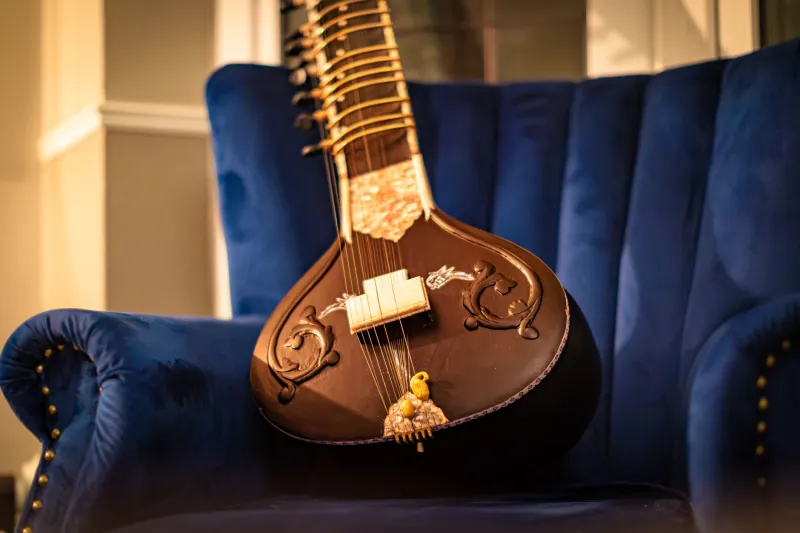
Sophie, 23, studies music technology in Leeds and has been systematically visiting charity shops across West Yorkshire for two years. Her focus is specifically on music from the South Asian subcontinent — Bollywood soundtracks, Punjabi folk recordings, classical ragas on cassette. "Leeds has this incredible South Asian community history," she explains, "and it shows up in what gets donated. I've found things I genuinely can't find on streaming anywhere. Cassettes from the 1980s with hand-written labels."
She's not just collecting for the sake of it. Sophie has started DJing using her charity shop finds, blending them with contemporary UK club music. "It's like archaeology," she says. "But the artefacts are alive. You put them on and they play."
The Economics of Accidental Curation
There's a gentle irony in the fact that charity shops — institutions explicitly designed to raise money for good causes — are also functioning as some of Britain's most effective cultural preservation mechanisms. The volunteers who price records rarely have specialist knowledge. This keeps prices low, which keeps the material accessible to younger and less wealthy collectors. The result is an accidental democratisation of music history.
Some charity shops are wising up. Oxfam's dedicated music shops, which operate in several UK cities, now employ staff with genuine vinyl knowledge and price accordingly. This is understandable from a fundraising perspective — a rare Fela Kuti original is worth considerably more than 80p — but it does shift the dynamic. The joy of the charity shop find has always been partly in the randomness, the sense that you couldn't have predicted it.
"The moment they start curating properly, it stops being discovery," argues Daniel. "It becomes just another record shop. Which is fine. But it's different."
Following the Sound Wherever It Leads
What strikes me most, talking to collectors across Britain, is the way a single charity shop find can function as a travel guide — not to a place you'll necessarily visit, but to a sound world you'd never have found otherwise. A Congolese soukous record picked up in a Wolverhampton Save the Children leads to an obsession with central African guitar music. A cassette of Gnawa trance music from a Cardiff hospice shop opens a door to Moroccan spiritual traditions.
This is music discovery at its most unmediated and most human: no algorithm, no recommendation engine, no influencer pointing the way. Just a crate, a sleeve, and fifty pence.
The world, it turns out, has been donating itself to British high streets for decades. We're only just starting to notice.