From the Ends to the World: How Britain's Streets Rewired Global Music
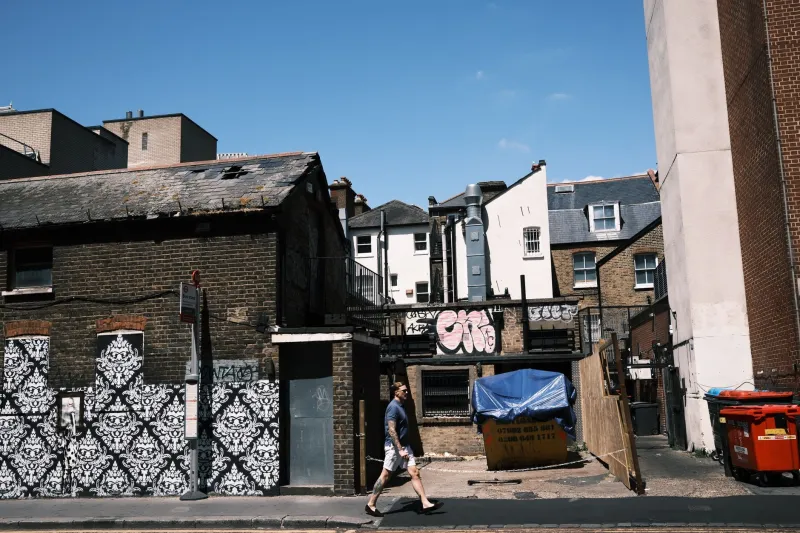
There's a moment in Skepta's 'Shutdown' — that lurching, minimal beat, the clipped vowels, the sheer confidence of it — where you can hear something genuinely new. Not new in the way marketing departments use the word, but new in the way that matters: a sound that couldn't have existed anywhere else, born from a very specific set of streets, estates, and pirate radio frequencies. Grime is British in the way that jazz is American — not just in origin, but in attitude, in the particular friction that produced it.
But here's the thing about music born from friction: it travels. And when it lands somewhere new, it doesn't stay the same.
Built in Britain, Broadcast Everywhere
Let's be honest about something. For a long time, British cultural commentary was oddly reluctant to celebrate grime on its own terms. The genre that emerged from east London in the early 2000s — built from jungle, garage, dancehall, and the specific alienation of young Black British men navigating a country that wasn't quite sure what to do with them — was frequently dismissed, policed, and marginalised before it was eventually lionised.
Now, of course, it's claimed as a national treasure. Stormzy headlining Glastonbury in a stab-proof vest emblazoned with the Union Jack was one of the most potent cultural images of the last decade. Dizzee Rascal's Mercury Prize win for Boy in da Corner back in 2003 feels, in retrospect, like a fault line in British music history — the moment the mainstream had to acknowledge something it had been trying to ignore.
But grime's global influence runs deeper than festival headliners and award ceremonies. You can hear its fingerprints on drill music from Chicago to Cape Town, on the clipped flow of artists from Toronto to Tokyo, on the production choices of pop records that would never describe themselves as grime-adjacent but absolutely are. The 140 BPM skeleton, the sparse, ominous beats, the confrontational lyricism — these ideas have been absorbed into the bloodstream of global pop without always being credited.
The Jamaican Root System
To understand grime properly, you have to go back further than Bow E3. The British-Jamaican diaspora is one of the most creatively generative forces in modern music history, and its influence on what eventually became grime is foundational rather than incidental.
Sound system culture — the Jamaican tradition of massive outdoor parties anchored by competing sound rigs, DJs, and MCs — arrived in Britain with the Windrush generation and took root in cities like London, Birmingham, and Bristol. It evolved into lovers rock, then jungle, then drum and bass, then UK garage, and then — in the hands of producers like Wiley — into grime. Each step involved a conversation between Jamaican musical DNA and the specific British context it found itself in: the council estates, the pirate stations, the particular coldness of a London winter.
When UK listeners trace grime back to its source, they're not just discovering Jamaican music as a historical footnote. They're discovering a living, evolving tradition. Dancehall in 2024 sounds nothing like it did in 1985, and yet the thread is unbroken. Artists like Koffee, Popcaan, and Skillibeng are working within a tradition that has been in constant dialogue with British music for sixty years. Following that thread is one of the most rewarding journeys a curious listener can take.
Lagos Took the Blueprint and Built a Skyscraper
If grime's relationship with Jamaica is one of ancestry, its relationship with Afrobeats is more like a sibling rivalry that became a creative alliance.
Afrobeats — and it's worth distinguishing this from Fela Kuti's Afrobeat, though the family resemblance is real — is a broad umbrella covering the Afropop sounds that emerged from Nigeria and Ghana in the 2000s and 2010s. Wizkid, Burna Boy, Davido, Tiwa Savage: these artists didn't just absorb British influences, they synthesised them with Yoruba rhythms, highlife traditions, and American R&B into something that has now, rather spectacularly, conquered the global charts.
The relationship is genuinely reciprocal. Wizkid's collaboration with Drake on 'One Dance' introduced millions of UK listeners to Afrobeats, but Wizkid had been listening to British music for years before that. Burna Boy, who grew up partly in London, is explicit about how UK sounds shaped him — and equally explicit about his African identity and his refusal to let those two things be seen as contradictions.
For UK listeners, this reciprocity is an invitation. The Afrobeats you hear on Radio 1 is a polished, globally optimised version of a much richer and more complex tradition. Dig into the Afrobeats archives — early Wizkid mixtapes, the entire Fela Kuti catalogue, the Lagos highlife records of the 1970s, the Ghanaian hiplife scene — and you'll find a musical world of extraordinary depth that the chart hits can only gesture towards.
Why This Matters Beyond the Music
There's a political dimension to all of this that's worth naming directly. The cultural exchange between Britain, the Caribbean, and West Africa didn't happen in a neutral context. It happened in the long shadow of the British Empire, of the transatlantic slave trade, of Windrush and the hostile environment. The music that emerged from these diasporic communities wasn't made despite that history — it was made through it, as a way of asserting identity, community, and joy in conditions that were actively hostile to all three.
When UK listeners engage with grime, with Afrobeats, with dancehall, with the full breadth of Black British music and its global connections, they're not just consuming entertainment. They're participating in a cultural conversation with real stakes. The least we can do is show up informed.
That means going further than the algorithm takes you. It means seeking out the underground, the independent labels, the artists who haven't been smoothed into mainstream palatability. It means, in the spirit of Traveller Music, following the sound wherever it leads — even when it leads somewhere uncomfortable, unfamiliar, or brilliantly strange.
The music is there. The journey is yours to take.